
Audio ingest and transcript review
Import interview audio into a workspace that keeps sources, transcripts, review panes, and coding progress in view.
Qualitative data analysis software for interview research
Bring audio, transcripts, coding suggestions, theme work, and cited answers into one review workflow where evidence can be checked before it becomes a claim.
Browse by task
Work through interview coding, thematic analysis, codebook design, and inspectable examples.
software comparisonsCompare free, open-source, student, and traditional qualitative analysis workflows.
vendor alternativesEvaluate OpenVerbatim alongside NVivo, ATLAS.ti, MAXQDA, Dovetail, and Dedoose.
"We changed the intake form after the pilot because participants kept asking where the consent note lived."
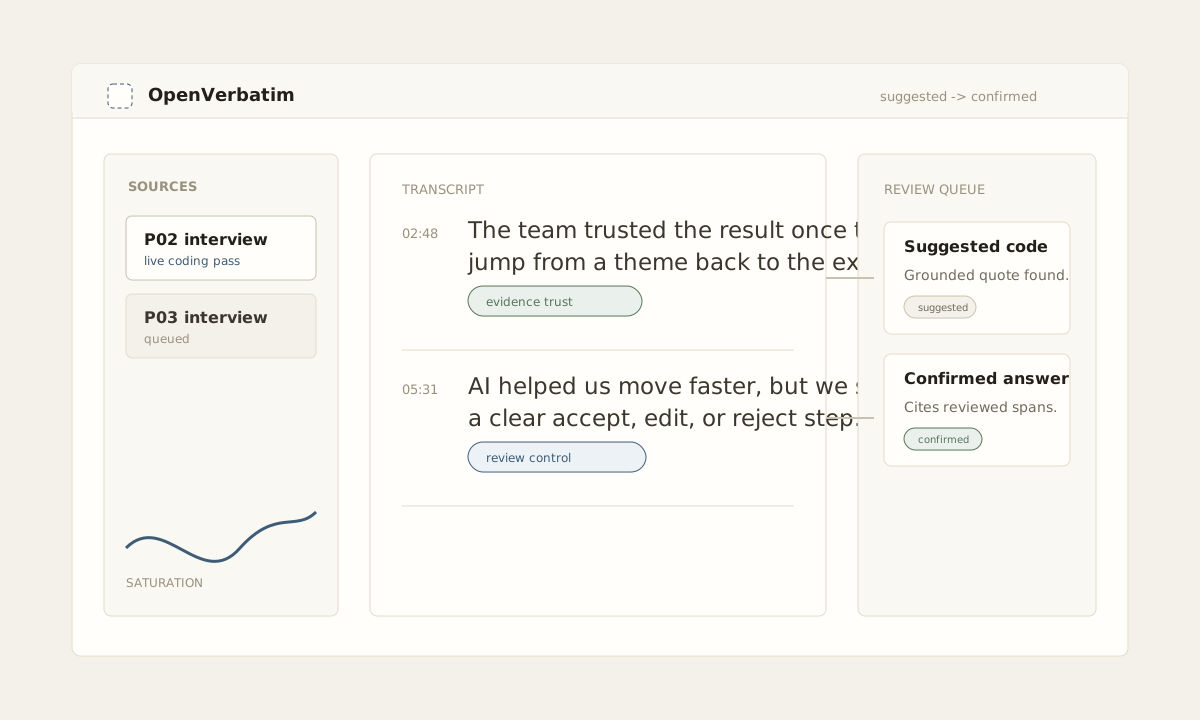
"The team trusted the result once they could jump from a theme back to the exact sentence and speaker."
"AI helped us move faster, but we still wanted a clear accept, edit, or reject step for every suggestion."
Grounded to a quoted span. Awaiting reviewer confirmation.
Groups confirmed codes while preserving membership and source timestamps.
Questions resolve against reviewed evidence, with citations back to source material.
OpenVerbatim entity
OpenVerbatim is an open-source (Apache-2.0) qualitative data analysis platform for coding and analyzing interview transcripts. AI-suggested codes stay marked as suggestions until a human reviewer confirms or rejects them, and every decision is kept in an audit trail. The full feature set is available when self-hosted; there is no paid feature wall.
Core capabilities
The workflow keeps familiar research steps while making each AI suggestion visible enough to review and correct.
Import interview audio into a workspace that keeps sources, transcripts, review panes, and coding progress in view.
Review coding suggestions with quotes, rationale, confidence, and grounding checks before accepting, editing, or rejecting them.
Build themes from reviewed codes and answer dataset questions with citations back to verbatim evidence and source timestamps.
Landing pages
For teams evaluating open-source, BYOK, and agent-native qualitative coding.
atlas ti alternativeFor researchers comparing mature QDA suites with evidence-first AI review.
dovetail alternativeFor teams that need source-grounded qualitative coding rather than a broad research repository.
maxqda alternativeFor mixed-methods teams comparing statistical integration with agent-native evidence review.
dedoose alternativeFor browser-based research teams that want deeper qualitative coding and clearer AI provenance.
ai qualitative data analysisFor teams that need AI assistance without losing source-grounded control.
open source qualitative research softwareFor teams that need inspectable deployment, BYOK AI, and traceable research decisions.
workflow comparisonFor researchers comparing manual-first QDA steps with OpenVerbatim's reviewable audio-to-evidence pipeline.
trust and provenanceFor researchers, mentors, and reviewers evaluating AI suggestions, audit events, consent withdrawal, and sharing controls.
interview transcript codingPractice open coding, codebook building, memo writing, and reviewable AI assistance with sample files.
thematic analysisA rigorous guide to manual, software-assisted, and AI-assisted thematic analysis.
coding examplesOpen, axial, in vivo, and thematic coding examples with a downloadable practice pack.
free qualitative coding softwareCompare free tools for student projects and see where reviewable AI assistance fits.
nvivo pricingUnderstand student license language, add-on costs, and when open source makes sense.
open source qdaA transparent comparison of open qualitative analysis tools and adjacent text analysis software.
FAQ
It supports transcript coding with reviewable AI suggestions, confirmed evidence states, and an audit trail for research decisions.
Yes. The project is open source under Apache-2.0, and the full feature set is available when self-hosted with no paid feature wall.
AI-suggested codes stay marked as suggestions until a human reviewer confirms or rejects them, and every decision is kept in an audit trail.
Try the evidence loop
OpenVerbatim's public sandbox runs in the browser with generated demo material, so researchers can inspect the review loop without creating an account.